
Jewish Educational Vision
My vision as a Jewish educator is to cultivate learning environments in which creativity is recognized as a sacred and essential mode of Jewish meaning-making. I am drawn to the moments when learners experience understanding not only cognitively, but with their whole selves: emotionally, physically, and creatively. When something clicks for a learner, their inner light shines through. For some learners, this emerges through decoding Hebrew or reciting a blessing with confidence; for others, it comes through the creation of art and the opportunity to express what Jewish learning means to them. I believe these moments are not incidental, but essential to meaningful Jewish education.
This e-portfolio reflects my passion for elevating arts education within Jewish supplementary school settings, where creative work is too often treated as a disposable component of learning. Grounded in Jewish texts that position creation as a Divine and deeply intentional act, and informed by educational research on arts-integrated learning, I view artistic practice as a powerful pedagogical tool. When thoughtfully designed, art becomes a way for learners to interpret, wrestle, and communicate meanings that may be difficult to articulate through words alone.
I seek to lead by example by modeling a values-driven approach to Jewish education that honors imagination, process, and multiple ways of knowing. Having worked in numerous supplementary school settings, I am particularly mindful of the real constraints educators face including: limited resources, time, and formal training in the arts. As someone who loves art but has no formal training, I have often felt overwhelmed and unsure of what I have to offer to a group of learners through art. Through trial, error, and more trial, I have discovered a love of creating Jewish art and sharing it with others. I hope to encourage Jewish educational leaders to lean into creativity and encourage their learners to do the same. By reframing art as an integral part of Jewish learning, I aim to encourage a shift towards deeper engagement and more authentic relationships with Jewish content.

Why Jewish Arts Education
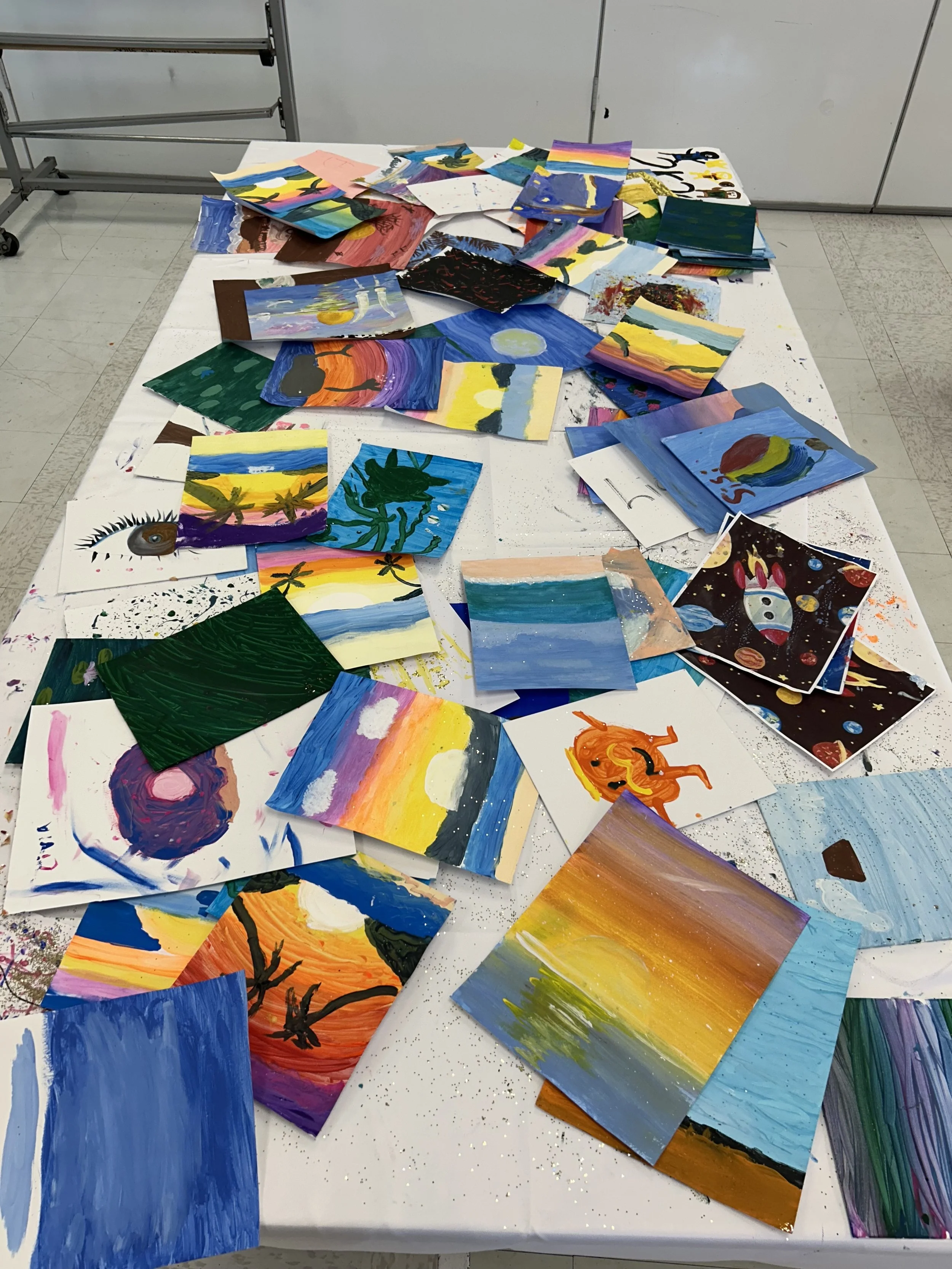
Creation is at the core of Jewish text, tradition, and practice. From the very beginning of Genesis, there is creating. Genesis 1:1 reads, “When God began to create heaven and earth…” depicting God as the first creative in the world. The Hebrew used here is the verb bara, meaning to create or form, specifically with God as the subject. This shows the work of creating as a Divine practice, rather than rudimentary arts and crafts. Too often, art projects in supplementary education settings are throw-aways - both in regard to the quality of supplies used and the educational content and purpose behind them.
Genesis 1:1 reads, “When God began to create heaven and earth…” depicting God as the first creative in the world
The reasons beyond these throw-away projects vary depending on the educational institution, but are not unique to Jewish educational settings. Eisner (2003), when examining Jewish day schools, argues that many reasons for this are the orientation to prioritizing students’ test scores, rather than arts and the ability to think imaginatively. Though test scores may not be a factor in supplementary Jewish education, the equivalent may be quality of Hebrew skills or performance during b’nai mitzvah that take preference over nurturing the passion and skills of creating. This priority may present as placing higher value on the more conventional ways of learning, such as language arts or mathematics, but Eisner reminds educators of the ancient use of drawings to convey emotions and stories that could not be expressed through spoken language (2003). Milgrom refers to this idea as “nonverbal imagination,” recognizing the potential that lies within one’s work (1992). Further, Eisner (2003) believes that the function of the arts is to provide a means through which meanings that are ineffable can be expressed. Allowing and encouraging young Jewish minds to explore the arts holds an immense amount of untapped potential and possibility.
In engaging learners in Jewish content through an artistic and creative lens, there is an opportunity to utilize the process of creating to generate original thinking that has the potential to add significant value to the world of Jewish education (Heller Stern, 2024). In addition to this value add, research demonstrates that both students and teachers can experience various psycho-social-educational benefits when arts are interwoven with different subject matter (Reingold & Samson, 2024).
This focus on the intersection of Jewish education and arts education will give educators the tools to contextualize a project and deepen its meaning.